White Spruce in Interior Alaska
Overview
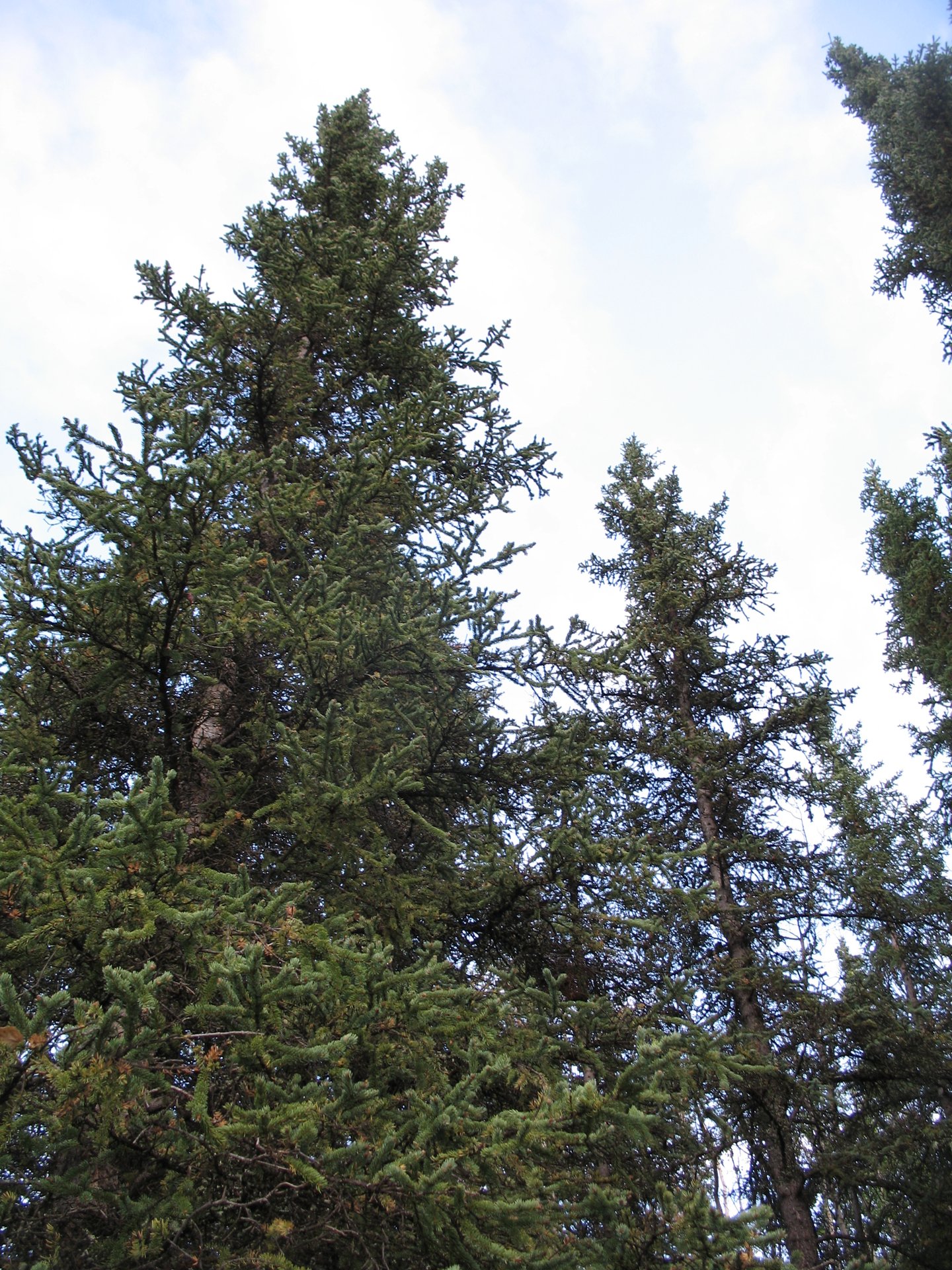
White spruce (Picea glauca; family Pinaceae) is the dominant tree of well-drained upland sites across interior Alaska, including the lower elevations of Denali National Park. It's most easily told from black spruce by its hairless, tan to orange-brown twigs (black spruce twigs are fuzzy with dark brown hairs), stiff blue-green needles attached individually around the twig, and longer cylindrical cones that hang down from the branches [1]; [2]. In Denali, white spruce occupies south- and west-facing slopes and river terraces, reaching roughly 750 m at central-Alaska latitudes and up to about 1,000 m on the warmest south-facing aspects [3]; [1], grading into shrub tundra above; upland and floodplain white spruce stands together cover about 10% of the interior boreal landscape [4]. It's the most productive forest type in the region and anchors a wildlife cascade through its cone crop (red squirrels, crossbills) and old-growth cavity structure (marten). Cone crops are unpredictable — good seed years arrive at roughly 10–12 year intervals [5].
1. The Boreal Mosaic
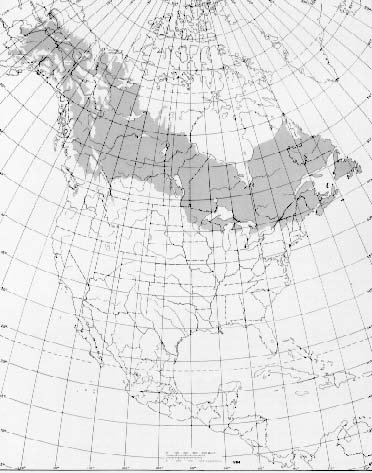
White spruce occupies sites where soils drain freely and permafrost is absent or lies at a deep active layer. Viereck and Little put it plainly: the best stands grow on warm, dry south-facing hillsides and adjacent to rivers where drainage is good. The Alaska Vegetation Classification [6] specifies the conditions — young river terraces lacking permafrost, low-elevation slopes with well-drained soils on south, west, or east aspects, soils moderately well drained with permafrost absent or deep. Despite being interior Alaska's most productive forest sites, upland and floodplain white spruce stands together cover only about 10% of the landscape [4].
Black spruce (Picea mariana) takes the opposite pole: north-facing slopes, poorly drained lowlands, and any site where permafrost is close to the surface and the active layer stays saturated through the growing season. On these sites permafrost can be as shallow as 30 cm, the active layer lies entirely within the organic horizon, and organic-layer soil moisture by weight remains above 100% throughout summer [5]. Black spruce forests account for roughly 44% of interior Alaska's forest cover — the single largest vegetation type by area [4].
The mosaic is held in place by a feedback running through soil temperature and drainage. Permafrost impedes infiltration: ice-rich frozen soil prevents water from moving into the subsurface, so precipitation and snowmelt saturate the surface organic layer. Chapin et al. frame it as discontinuous permafrost "magnifies the differences in soil moisture that would normally occur along topographic gradients." Aspect drives the initial thermal asymmetry — permafrost is generally absent on the upper parts of south-facing slopes and generally present on north-facing slopes and valley bottoms. The colluvially transported silt deposits at the base of south-facing slopes often mark the permafrost boundary between uplands and lowlands.
Each vegetation type then actively maintains the conditions it occupies. Black spruce's thick moss and organic mat insulates underlying permafrost; the thermal offset on organic, poorly drained sites runs −1 to −2.5 °C, meaning the ground stays colder than the air surface temperature and permafrost persists despite warming air [4]. White spruce on drained sites lacks this insulating mat; soils warm more readily in summer and permafrost does not develop or re-develop. There is also a whole-stand radiation effect: coniferous stands have low albedo and limited latent heat loss, so they shed absorbed radiation primarily as sensible heat flux at rates at least twice those of deciduous stands, while the moss mat keeps the underlying soil cold. The canopy warms while the soil stays frozen.
Larsen (1980) adds a piece that helps explain why white spruce performs so well at the drained-but-not-dry middle of this gradient: a greenhouse gradient experiment found white spruce growth more strongly affected by water held in the upper soil than any of the other boreal conifers tested. The species needs drainage but also accessible capillary water — exactly the conditions present on river terraces and lower south-facing slopes — and is sensitive to waterlogging in a way that black spruce is not.
The mosaic is also a temporal snapshot. The two species occupy positions along a successional trajectory, not stable endpoints. Over centuries to millennia, white spruce stands on floodplain terraces paludify into black spruce (treated in §4). Fire interrupts the trajectory by consuming the organic mat (§5). What looks in any given decade like a static species partition is in fact a slow-moving exchange in which fire, succession, and permafrost dynamics keep the two species sorting themselves across the topography.
2. Life Cycle and Reproduction
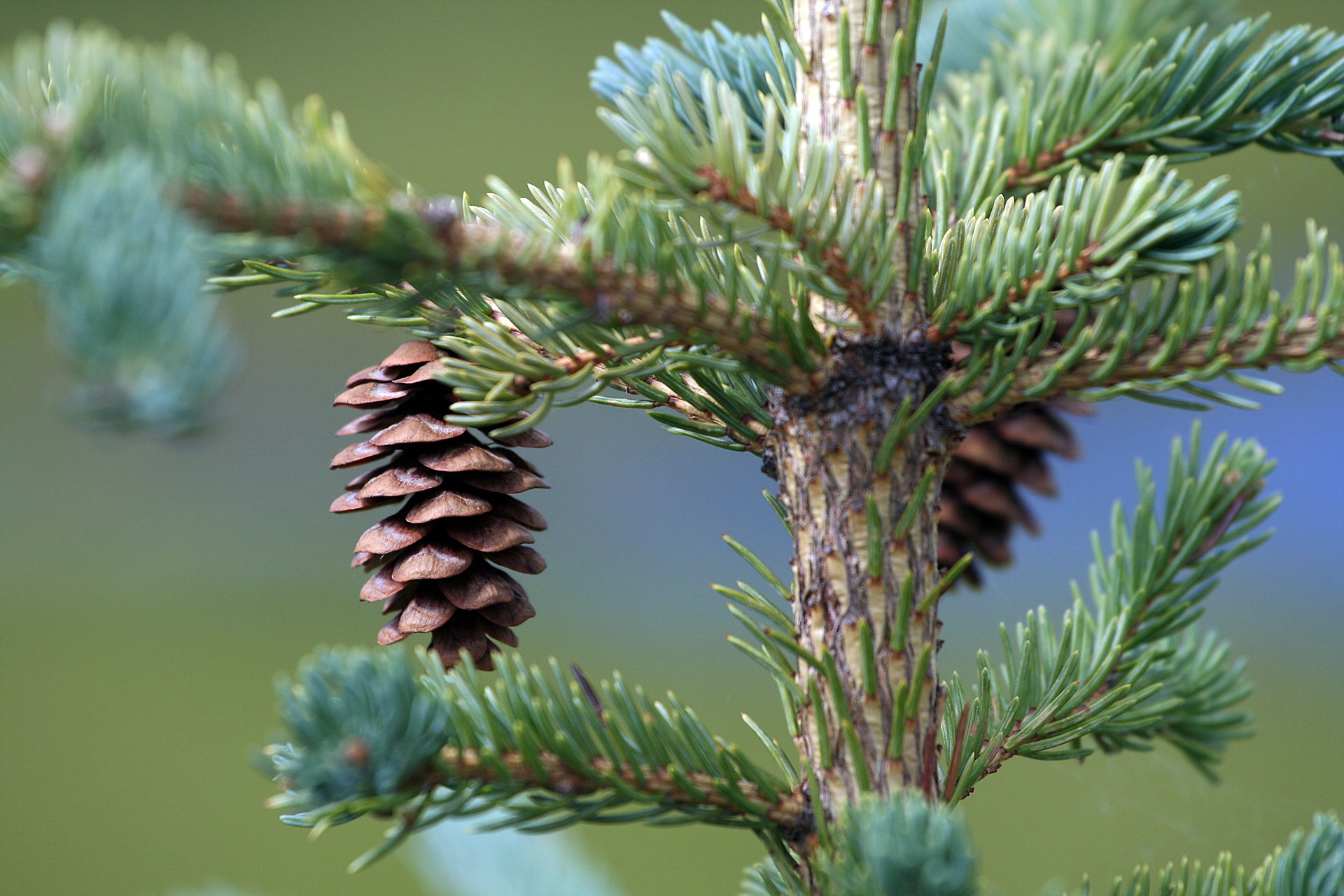
Flower bud initiation correlates with warm, dry conditions in June and the first half of July ([5], citing Zasada and Gregory 1969). This is the inductive signal: the previous summer's climate sets whether a given year's cohort of buds becomes reproductive. Pollination — anemophilous, wind-mediated — follows in the next spring, typically late May to early June in interior Alaska. [General knowledge, high confidence] This pollination timing is consistent across Picea glauca literature and aligns with Viereck and Schandelmeier's observation that most interior Alaska fires occur in June before seed ripens. Cones mature in a single growing season — the same season as fertilization, unlike the two-year cycle of pines or the serotinous cones of black spruce. Seed ripens in late summer to early fall, after June.
The timing has direct ecological consequences. Most interior Alaska fires occur in June, before the current year's seed is ripe. Even in a good seed year, a burn during fire season provides no on-site seed bank for the new scar — dispersal into the scar must come from surviving trees or unburned stands within range.
The interval between good white spruce seed crops in interior Alaska runs roughly 10 to 12 years [5], placing the species at the supra-annual end of masting periodicity. The unpredictability is consequential enough that the State of Alaska established a forest nursery at Eagle River in the 1980s specifically to buffer reforestation against natural seed-supply variability [4].
Seeds are small and winged, dispersed primarily by wind. Effective dispersal distance is short: roughly twice the tree height, or 45 to 60 m [5]. Both seed rain and seedling establishment drop off exponentially with distance from the source stand. Red squirrels (Tamiasciurus hudsonicus) are secondary dispersal agents and long-term cache builders, but caching is primarily a sink for seeds rather than a dispersal gain — most cached seeds are consumed.
The climate signal driving cone-crop variability has a complication worth flagging. [Conflict] Two passages in Chapin et al. (2006) describe the relationship differently. One states that seed production is enhanced by hot dry weather, the condition that also promotes wildfire, "so in the season following a year of high fire probability, white spruce seeds are more likely to be available to disperse to adjacent burn scars" — an interpretation supported empirically by Viereck and Schandelmeier's observation that the best seed years in interior Alaska (1958 and 1970) followed the major fire years 1957 and 1969. A second Chapin et al. passage inverts this, framing wet years as cone years and dry years as fire years. A plausible reconciliation, though not stated in either source, is that hot dry conditions in early summer promote bud initiation for the following season's cones while adequate moisture in the cone-development year supports seed fill — the two passages describing different phases of a multi-year process. The primary literature would settle this; the synthesis here cannot.
What is consistent across both sources: cone production is highly variable and climate-sensitive, poor crops are the norm, and the ~10–12 year masting interval means post-fire recruitment depends heavily on whether the burn coincides with a mast year and on whether seed sources remain within dispersal range.
3. Physiology and Adaptation
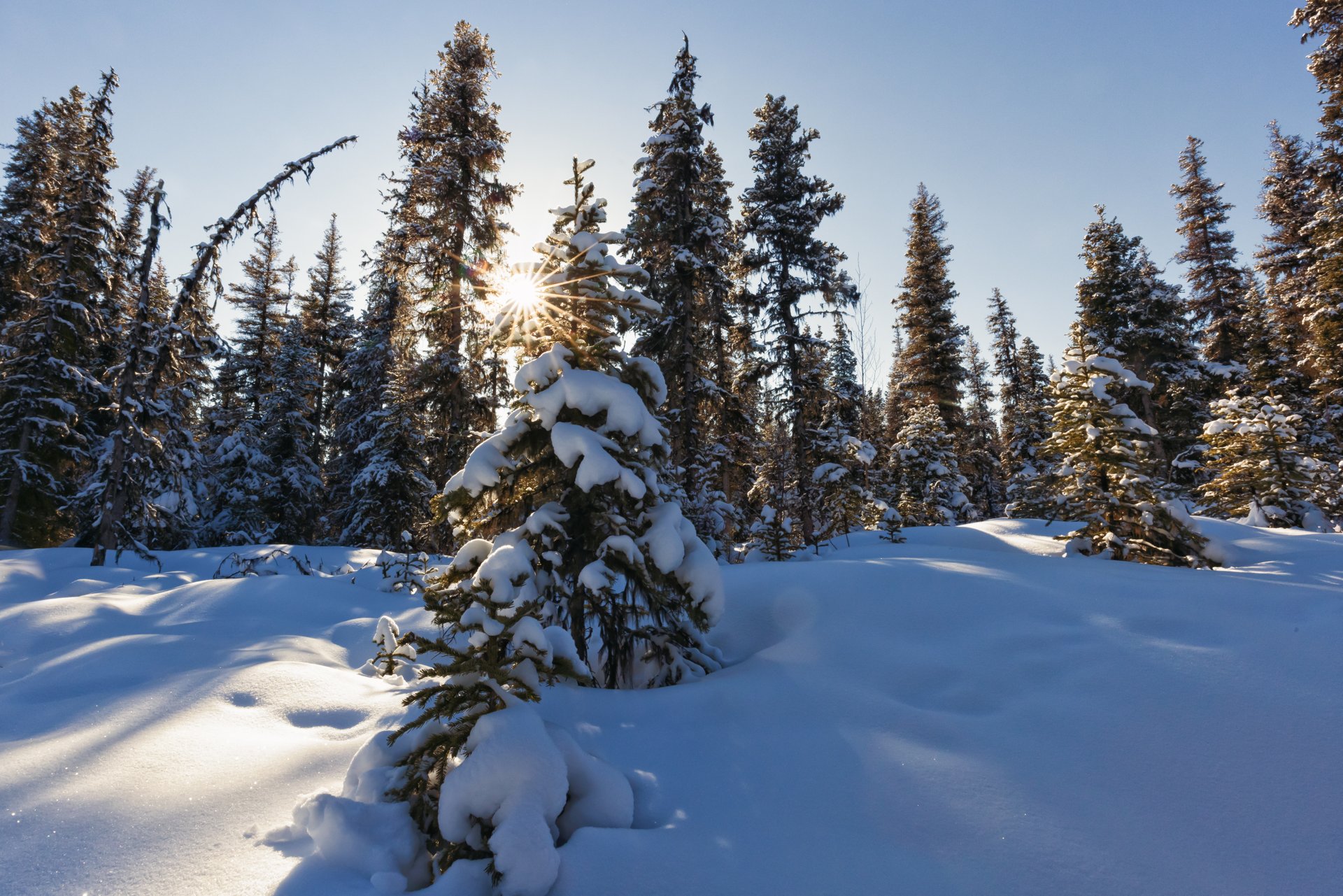
Interior Alaska imposes an annual temperature range approaching 100 °C — a thermal amplitude that would kill most temperate-zone conifers. White spruce's persistence rests on three interlocking systems: cold-hardiness, desiccation tolerance, and a root architecture matched to shallow active layers.
The fundamental cold-hardiness mechanism in white spruce and its boreal associates (black spruce, larch, balsam poplar, paper birch) is extracellular ice formation: as tissues cool, water migrates out of living cells into intercellular spaces, where it freezes without rupturing cell walls or membranes. Because ice forms outside the cells rather than inside them, the cellular machinery survives [9]. This contrasts with the deep-supercooling strategy of temperate hardwoods like oak, elm, and ash, which maintain liquid water inside cells down to about −40 °C but cannot survive colder temperatures — which is why those species stop at roughly the −40 °C minimum isotherm while white spruce ranges far north of it.
Marchand (2014) places white spruce's killing temperature at approximately −80 °C when fully hardened — a tolerance that substantially exceeds any temperature recorded in interior Alaska. Reaching that state is a two-stage process. The first stage is triggered by short days and non-freezing chilling temperatures, which stop growth and mobilize a translocatable hardening factor; abscisic acid plays a role, and osmotically active compounds — sugars, organic acids, water-soluble proteins — concentrate in cells. The second stage, which brings full hardening, requires direct exposure to freezing: no known translocatable factor substitutes for it. Once hardened, de-acclimation is governed largely by photoperiod rather than temperature, which provides a buffer against midwinter warm spells triggering premature dehardening.
The "winter drought" problem is real but often misframed. Marchand notes that the highest foliar water loss for exposed conifers occurs not during windy days but during periods of bright sunshine and calm — conditions that raise needle temperatures well above air temperature and drive transpiration without wind-induced boundary-layer thinning countering it. A "dry" windy day is actually less desiccating because increased wind speeds under calm-sunny conditions would reduce transpiration, not increase it. Marchand also notes that winter injury long attributed to desiccation often turns out to be rapid-freezing damage instead; the two damage modes are mechanistically similar and visually indistinguishable in needles. The sheltered stands of the interior face less winter desiccation stress than isolated trees at treeline or on exposed ridges, where the risk is genuine.
Active-season drought is a different matter. Chapin et al. (2006) document white spruce's moisture sensitivity in a different register: rain exclusion experiments on Alaskan floodplain stands reduced basal area growth from 9.93 cm² to 3.85 cm² over 1991–1997 — roughly a 60% reduction — demonstrating that these trees are anything but drought-indifferent when active-season water is cut. Floodplain white spruce is extremely shallow-rooted and depends heavily on precipitation inputs for summer water; when river levels drop and coarse soils drain quickly, soil moisture drops fast and trees respond.
The shallow root architecture is both a constraint and a competitive advantage. Cold soil directly inhibits deep root growth — the cold mineral subsurface is metabolically too expensive to colonize [4] — so roots spread laterally in the upper organic and mineral horizons rather than descending. Larsen (1980) identifies this as the reason both Picea species can occupy sites too shallow for taproot species like jack pine and most deciduous trees: a 30–40 cm active layer that would exclude most competitors is workable for them. Growth on permafrost sites depends on tight nutrient cycling within the surface and buried organic horizons; the shallow root zone is also the biogeochemical engine. The tradeoff is instability — annual refreezing of the active layer progresses from the surface downward, and cryoturbation continuously disrupts both surface and rooting zones [7]. The characteristic "drunken forest" appearance, where mature white spruce leans at angles across frost-heaved ground, is a direct product. There is also a fire vulnerability embedded in the root architecture: thin bark and shallow roots make white spruce severely susceptible to surface fires, with roots as large as 8–9 inches in diameter killed by severe burns.
Pielou (1994) adds one local feedback: where tree crowns reduce winter snowpack directly beneath them, the ground under an individual tree may freeze more deeply than the surrounding stand, potentially developing a private permafrost "pedestal" that slowly builds upward — meaning a single tree can alter its own substrate over decades.
[Not in sources] The catalog covers winter ecology (Marchand) and boreal ecosystem function (Chapin, Larsen, Viereck and Little) well, but lacks a dedicated white spruce ecophysiology monograph at the level of detail a species-focused literature (e.g., Nienstaedt and Zasada's USFS species account) would provide. Mechanistic detail on needle anatomy, stomatal control, and mycorrhizal architecture under permafrost conditions is not present in the routed sources.
4. Stand Development and Succession
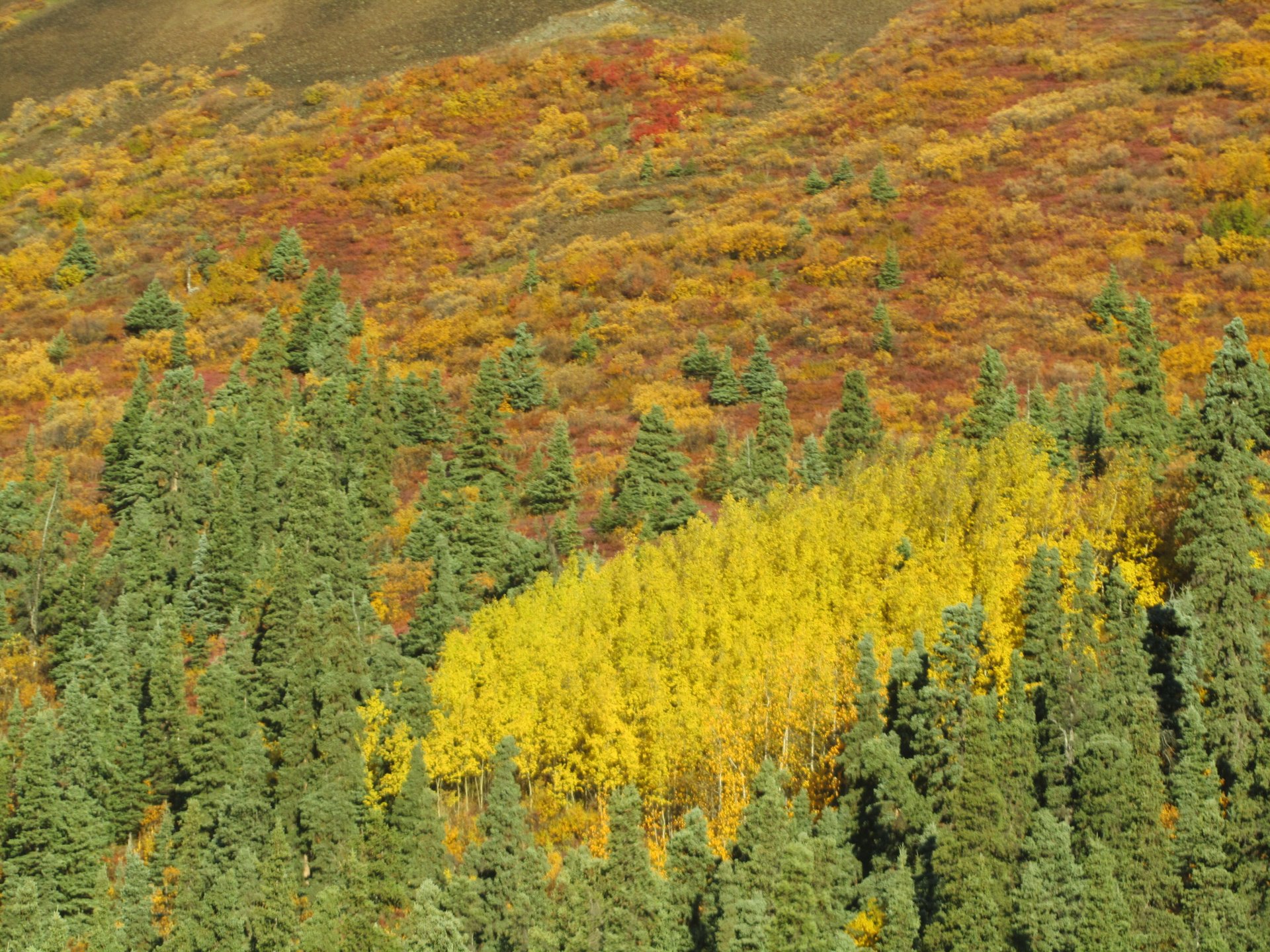
White spruce arrives late in both primary and secondary succession on interior Alaska's productive sites. Its eventual fate depends on whether permafrost establishes beneath it.
Primary succession on floodplains. The Tanana River chronosequence is the most thoroughly documented primary succession sequence in interior Alaska. Within roughly five years of a new alluvial bar forming, horsetail (Equisetum spp.), willow (Salix spp.), and balsam poplar (Populus balsamifera) are the primary colonizers [4]. These species develop deep roots that stabilize soils during flooding and tap the shallow water table during dry periods. The transition to a closed shrub stage dominated by thinleaf alder (Alnus incana subsp. tenuifolia) on fine-textured substrates marks a critical ecological turning point: alder's nitrogen fixation begins building soil capital, flood return interval drops from annual to every 5–10 years, and aboveground biomass increases 10- to 50-fold.
Balsam poplars that established in the shrub stage grow rapidly once they break above the alder canopy. The transition from alder thickets to a recognizable poplar forest takes 10–20 years [4]. White spruce seedlings establish within the poplar stages, where sediment deposition from floods provides a mineral seedbed and rapid nutrient cycling in buried organic horizons supplies abundant nutrients. Spruce grows in subcanopy position, benefiting from reduced evaporative stress but limited by light. Most floodplain white spruce stands are initially even-aged, establishing over 20–40 years and emerging through the poplar canopy to dominate at roughly 100 years of age. Subsequent recruitment can occur in 40- to 60-year pulses, producing uneven-aged stands that may reach 300 years old.
The end of this trajectory is paludification. On old alluvial terraces, accumulating spruce litter and moss develop into a thick organic mat, soil temperatures drop, and permafrost begins to form ([7], citing Viereck 1970). As the permafrost table rises, drainage is impeded; Sphagnum mosses establish, conditions shift from mesic to hydric, and black spruce gradually displaces white spruce. Chapin et al. assign this transition timescales of 500–4,000 years, noting that river erosion and fire have eliminated most transitional stands in the active floodplain — the endpoint is largely inferred from old-terrace communities.
Primary succession on moraines. The floodplain sequence has detailed documentation; interior Alaska moraine sequences do not. [Not in sources] A Glacier Bay–style sequence — dryas → willow/alder → cottonwood/Sitka spruce — is the standard reference for post-glacial primary succession in Alaska, but it involves Sitka rather than white spruce and runs in coastal conditions. A comparable detailed sequence for interior Alaska moraines (Muldrow terminus, Kahiltna outwash) is not present in the routed catalog. What the sources do address is the role of permafrost in setting a ceiling on post-glacial forest recovery at high latitude. Larsen notes that in far-northern discontinuous permafrost zones, once forest is eliminated, the "traditional concepts of forest succession must be inapplicable" — no species assemblage may be capable of recreating conditions for spruce ecesis without climate amelioration. White spruce persists northward along waterways beyond the upland treeline because the high heat-exchange capacity of water maintains deeper active layers along shorelines. On exposed glacial moraines in the interior, white spruce colonization may be fundamentally limited by permafrost depth — the succession clock may not run on a human timescale.
Secondary succession after fire. On south-facing uplands (permafrost-free), post-fire succession runs through paper birch (Betula papyrifera) and quaking aspen (Populus tremuloides) before white spruce closes the canopy. White spruce lacks serotinous cones and has low post-fire seed availability relative to black spruce; it depends on seed rain from surviving trees, entering the birch–aspen stands progressively [7]; [1]. The deciduous stage is actually the most productive successional stage, with high-quality litter maintaining rapid nitrogen mineralization — conditions that also suppress moss establishment and delay the shift toward spruce dominance [4]. The transition from deciduous forest to white spruce dominance typically occurs at around 100 years in the absence of fire. Annual nutrient uptake in the white spruce stage drops to only 30–40% of the deciduous-forest stage. White spruce stands older than 200 years are uncommon, not because succession proceeds further but because fire typically intervenes.
The natural fire interval in interior white spruce stands runs around 113 years in the Porcupine River basin compared to 36 years for black spruce (Yarie 1981, cited in [4]). Near Denali, aspen forest age distributions suggest intervals as low as 40–60 years (Mann and Plug 1999, cited in [4]). But lake-sediment charcoal suggests that natural fire intervals in upland forests over the past 2,400 years averaged 198 ± 90 years — considerably longer than stand-age estimates imply. The discrepancy reflects methodological differences: stand-age analysis captures recent fire frequency, which may be elevated; charcoal integrates longer millennial trends.
On north-facing slopes where permafrost is present, black spruce dominates and behaves differently post-fire — returning to dominance in 15–30 years rather than 100, largely skipping the deciduous stage (treated in §5). The landscape carries the two species on what amount to fundamentally different disturbance and thermal regimes.
5. Disturbance: Fire
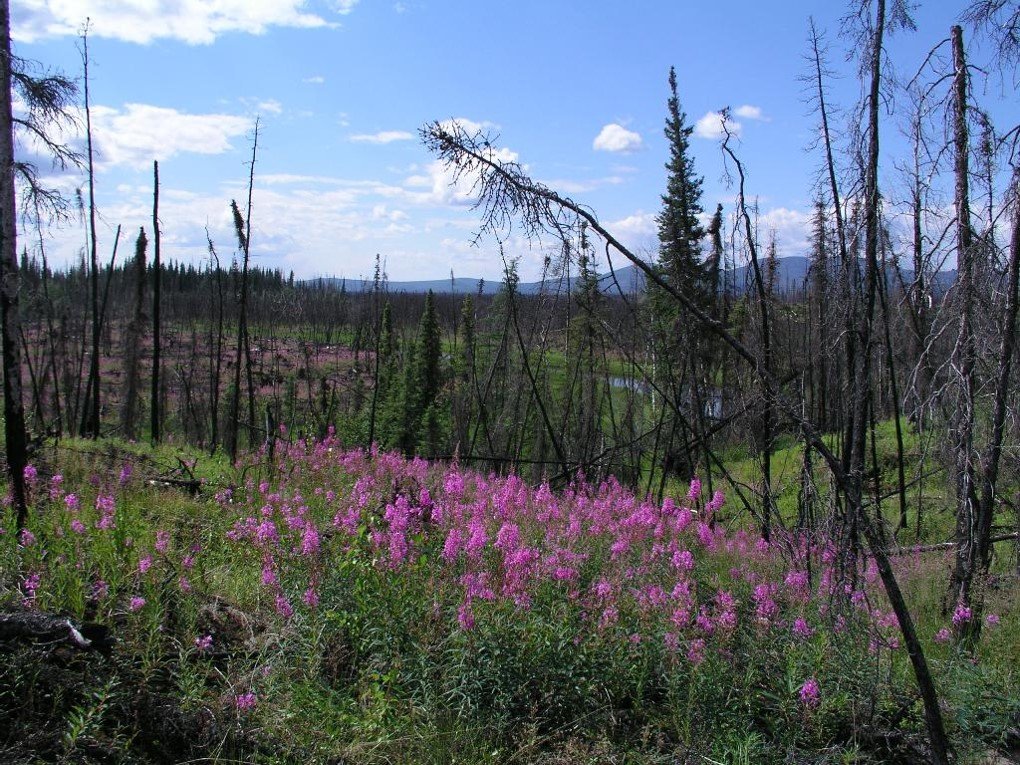
White spruce has essentially no fire-adaptive traits. It persists in the boreal mosaic by occupying habitats with lower fire frequency, not by tolerating fire when it comes [5]. Bark is thin and easily damaged; roots are shallow and vulnerable to surface fire — Larsen (1980) reports roots as large as 8–9 inches in diameter killed by severe burns. Structurally, white and black spruce are about equally susceptible to fire. Viereck and Schandelmeier note that "in Alaska all of the tree species are relatively thin-barked and equally susceptible to fire," and distribution and abundance are driven by regeneration capacity, not resistance.
The critical regeneration difference is seed biology. White spruce cones mature and release seeds within a single season, leaving no canopy seed reserve. Good seed crops occur only every 10–12 years, and most fires happen in June before the current year's seed ripens. Post-fire recruitment depends on seed blown in from unburned areas or from surviving trees within dispersal range — roughly two tree heights, 45–60 m [5]. An area that burns during a low-seed year may go decades without adequate white spruce propagule supply.
White spruce compensates by growing where fire is less likely to reach: floodplain islands and terraces buffered by water, and upland "stringers" surrounded by hardwood matrix. Quirk and Sykes (1971), cited in Viereck and Schandelmeier, documented white spruce stringers remaining unburned while adjacent black spruce stands burned repeatedly, attributing the difference to higher organic-layer moisture. Once established, stands that escape fire can persist 200+ years, occasionally to 300 years [4], but stands this old are uncommon precisely because fire typically recurs first. The 100-year succession time and 113-year fire interval often align — stands burn just as they reach mature dominance.
Black spruce is equally killed by fire but has evolved to exploit it. Cones are semiserotinous — they persist on the tree for years and release seeds when heat causes them to open, typically one to five years after fire [4]; [5]. This delivers seeds directly to the post-fire seedbed from an on-site aerial seed bank, eliminating the white spruce problem of needing an external seed source at the right moment. Only after the most severe fires, in which crown and cone material are fully consumed, do seed supplies become inadequate.
Black spruce structure also promotes the fires it depends on. An open, flammable ericaceous shrub layer carries flame at 0.5–1 m above the surface; lichen-covered lower branches continue the fuel ladder directly into the crown; branch layering provides nearly continuous fuel from forest floor to canopy [5]. Stand-replacing fire is the norm, with both species killed; the distinction within black spruce stands is not whether trees die (a given) but depth of organic layer consumed — which determines seedbed conditions, permafrost thaw response, and nutrient availability [10]. Because black spruce can germinate from on-site canopy seed within one to five years and does not require a prolonged deciduous stage, it returns to a spruce-dominated stand in 15–30 years — about 20–30% of the time required for white spruce succession [4]. Black spruce ecosystems are, as Chapin et al. put it, "born to burn" — the fast recovery cycle reinforces continued dominance even under high fire frequency.
The shifting fire regime. This part of the picture has a currency dimension. The primary synthesis source [10] covers only through 2009; the major fire years since (2015, 2019, 2022) are [not in sources]. Through 2009, Kasischke et al. document roughly a 50% increase in average annual area burned in the 2000s relative to any prior decade since the 1940s, with an estimated fire-return interval dropping from 196 to 144 years. The mechanisms are longer fire-weather windows (extended growing seasons), increased lightning ignition in warm years, and greater drying of the surface organic layer. Human-ignited fires declined as a fraction of total burned area (from over 25% in the 1950s–60s to around 5% in the 1990s–2000s), so the increase in fire activity reflects climate drivers, not ignition management.
Black spruce–specific vulnerabilities emerge under a faster regime. A shortened fire-return interval creates two-pronged stress on regeneration [10]: trees that haven't reached sexual maturity before reburn can't contribute to the aerial seed bank; reduced fire-free period means less time for organic mat recovery, altering the seedbed the next fire produces. Under sufficiently severe fire, seedbed conditions may favor early-successional birch and aspen over black spruce — a potential compositional shift that Chapin et al. flag as plausible but not yet well quantified.
White spruce seed production shows an interesting coupling: hot, dry weather enhances seed crops the year following high-fire-probability conditions, meaning that in the year after a fire year, more white spruce seed may be available to disperse into adjacent burn scars [4]. [General knowledge, moderate confidence] Whether this climate-mediated seed-supply synchrony actually offsets the increased burn probability has not been established — both processes are accelerating under climate change, and the landscape-scale outcome depends on which regeneration bottleneck is hit harder.
6. Disturbance: Spruce Beetle
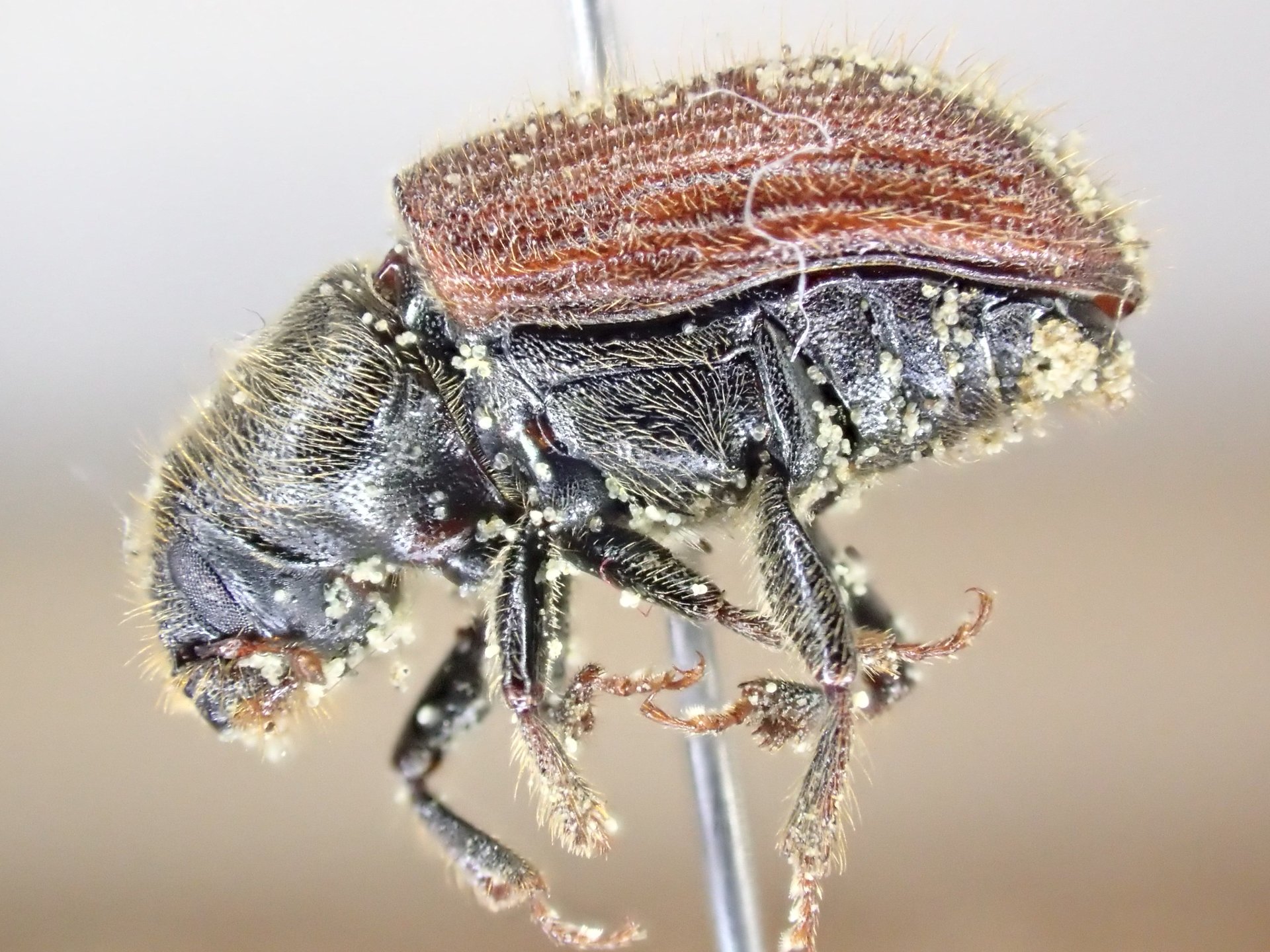
Dendroctonus rufipennis colonizes all spruce species within its range, but white spruce is the most developmentally suitable host — it supports faster larval development and higher progeny counts than Sitka or black spruce [4]. Within white spruce stands, susceptibility decreases predictably with site quality: large-diameter trees on creek bottoms and floodplain sites are attacked first, followed by trees on productive benches, then poorer ridge and mixed-species stands, then immature trees [11]. Most outbreak-scale infestations originate in windthrown material or large-diameter logging residue — downed hosts that require less mass-attack energy to colonize and serve as population-building reservoirs before beetles switch to standing timber.
The kill mechanism is a two-part system. Attacking beetles girdle the phloem, disrupting downward carbohydrate translocation. Simultaneously, blue-stain fungi vectored by the beetles penetrate the sapwood and occlude xylem conducting tissue, halting upward water transport. Together — not beetle feeding alone — these processes cause tree death [11]. Crown discoloration (green → yellow → reddish brown) lags the attack by one to two years depending on temperature and beetle density; a visually dead stand represents attacks that occurred a year or more earlier.
Life cycle. The spruce beetle exhibits facultative diapause: a single generation can run on either a one-year or two-year schedule depending on sub-bark temperature [11]; [4]. Under a two-year cycle, adults become active when sub-bark daytime temperatures reach 6.7 °C (47 °F) in spring of year 1; dispersal flights occur when ambient temperatures exceed 16 °C (62 °F), typically late May to early June. Females locate windthrown or stressed material, initiate attack, and males arrive and mate in nuptial chambers. Females excavate vertical egg galleries and deposit roughly 80 eggs per female. Most eggs hatch by August; larvae overwinter in galleries beneath the bark. In year 2, larvae resume feeding and pupate (10–15 days); newly eclosed adults migrate to the snow-insulated base of the host tree and overwinter there; the next spring they emerge and disperse. The pheromone cascade is central — attacking females release aggregation pheromones that recruit additional beetles, building the mass-attack pressure needed to overwhelm resin-flow defenses in healthy trees. Without sufficient beetle density, an individual tree's oleoresin response repels colonization.
The interior Alaska paradox. Here the story becomes counterintuitive. The climate-linked compression from two-year to one-year cycle — widely associated with the catastrophic Kenai Peninsula outbreaks of the 1990s — is primarily a south-central Alaska story. In south-central and southeast Alaska, two-year generations had been predominant prior to the 1980s; warming temperatures accelerated brood development to one year, and this compression was a major driver of the late-1980s and 1990s epidemic intensity [4].
Interior Alaska's situation is different. Warm summers there already typically produce the one-year cycle (Werner and Holsten 1985, cited in [4]). On temperature grounds alone, interior Alaska should be more prone to outbreaks than south-central — and it also has more lightning, killing trees and priming beetle breeding habitat. Yet landscape-scale outbreaks are rare to absent in interior white spruce forests, while south-central Alaska sees periodic eruptions covering millions of hectares.
Two abiotic factors appear to suppress interior outbreaks despite the favorable voltinism. Extreme cold winters kill enough overwintering beetles to keep populations below outbreak thresholds (Werner et al. 2006, cited in [12]). And interior Alaska's lower precipitation produces phloem with roughly 20% less moisture than south-central Alaska spruce; beetles perform poorly in dry phloem, whereas competing Ips engravers are more drought-tolerant [4]. Drier conditions also reduce the synchrony of adult emergence, which is critical for generating the coordinated mass-attack pulses that overwhelm tree defenses.
The climate-change concern for interior Alaska is therefore not primarily cycle compression — already accomplished — but two linked stresses: warmer winters reducing cold-kill of overwintering beetles, and drought stress reducing tree vigor and resin-flow defense capacity. Both shift the host–beetle interaction toward the insect. White spruce in interior Alaska already shows reduced growth in warm years due to warming-induced drought stress [4], making trees more susceptible to colonization at lower beetle densities. In stands adjacent to the interior — the Copper River Basin in the Wrangell–St. Elias region — outbreak-level mortality has already occurred, with the beetle preferring medium to large white spruce and converting mixed spruce forest to stands dominated by black spruce or patchy shrubland where canopy removal and permafrost dynamics interact [12].
Stand-level outcomes. A beetle-killed stand goes through a predictable sequence. Standing dead stems and eventual windfall accumulate dry fuels, substantially increasing fire hazard. Phloeophagous insects that kill a stand predispose it to fire by increasing fuel density and flammable ground vegetation [4]. Fire and insect mortality interact: beetle-killed stands may burn hotter and more extensively than live stands. With the spruce canopy removed, shade-intolerant species — willow, balsam poplar, paper birch, aspen — are released. Beetle mortality can effectively reset the successional trajectory, returning stands to the deciduous-dominated stages that precede white spruce. Wildlife habitat shifts mixed-positively for some species (snag density, structural diversity) and negatively for mature-canopy specialists. The subcortical insect community changes substantially — buprestid and cerambycid wood-borers colonize freshly killed wood in the first years, but species richness can decline 5–10 years post-disturbance as coarse woody debris weathers.
There is a permafrost feedback worth flagging that the sources do not explicitly draw. Removal of the insulating white spruce canopy on south-facing or well-drained sites where permafrost is already marginal could shift soil thermal regimes — and if black spruce replaces white spruce, as observed in the Copper River Basin, the moss-mat insulation black spruce builds would actively promote permafrost development, making the stand conversion self-reinforcing over time. (Footer disclosure.)
7. White Spruce in the Food Web
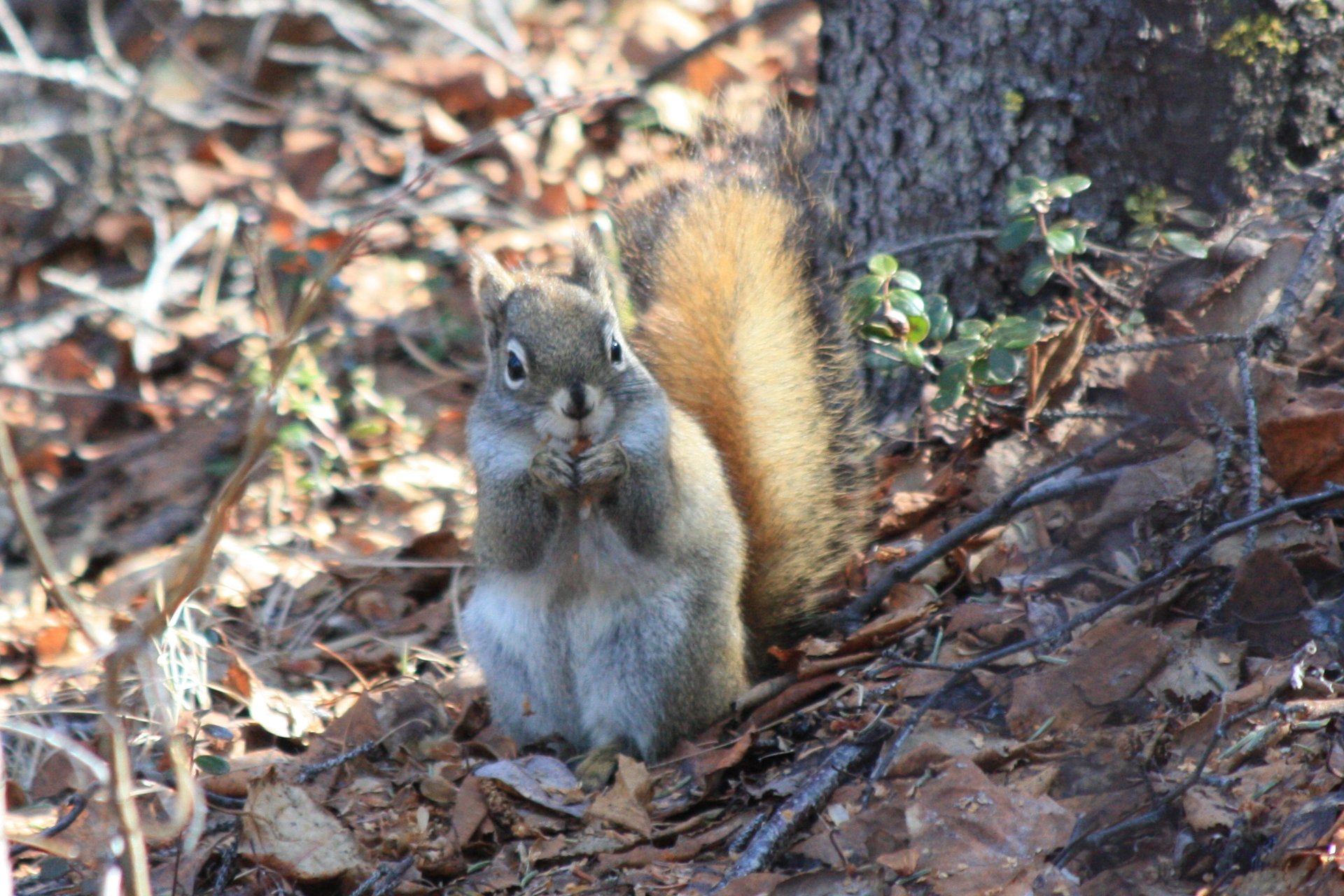
White spruce functions as food, shelter, and anchor point for a substantial slice of the interior boreal food web across multiple resource dimensions. The seed crop is the dominant pulse resource — Viereck and Little put it plainly: the red squirrel "is dependent throughout the winter on seeds from spruce cones stored beneath the ground." But the species' role extends through foliage, bark, and physical structure as well.
Seeds. Spruce grouse (Canachites canadensis) rely on spruce needles as a winter staple [7] and are among the few vertebrates enzymatically adapted to process conifer foliage. Red squirrels (Tamiasciurus hudsonicus) are the keystone seed consumer; in good years they cache 12,000–16,000 cones [8]. The midden — a mulch pile of cone-scale debris accumulated over generations — maintains cool, moist conditions that can preserve buried cones for two years or more, giving the squirrel a buffer against crop failure. Larsen captures what is at stake in a crop failure year: territorial defense of the midden, "without which starvation appears to be inevitable."
The most ecologically interesting piece of the squirrel–masting connection is the anticipatory linkage. Larsen, citing Kemp and Keith (1970), reports that flower bud differentiation in the preceding summer leads to a winter squirrel diet rich in flower buds, which stimulates reproduction; the resulting spring population surge then allows the squirrel population to capitalize on the heavy cone crop that materializes in late summer. The mechanism is essentially predictive — squirrels read the bud signal ahead of the cone crop and tune reproductive output accordingly.
Cone insects — seed chalcids, cone moths, cone worms, and a cone fly (Dasineura rachiphaga) — can be substantial consumers of the seed crop in their own right [11]. Combined with squirrel harvest in some seasons, the two together can destroy the entire local seed crop, often leaving no outward sign on the cones.
Foliage and bark. Spruce grouse depend on needles in winter [7]. Porcupines are the main bark consumer; bark of spruce (along with larch and fir) is their dominant winter food in boreal forest, and bark stripping can girdle and kill individual trees, creating snags that cycle back as denning habitat.
Structure. Marten require "cavities in large, old-growth trees for denning and resting" (ADFG 2025). Without mature or old-growth white spruce stands the species is effectively displaced, regardless of prey availability. Snowshoe hares are also structure-dependent: Larsen notes that coniferous cover screening detection from above is essential — "conifers evidently must be present" — though hares don't eat spruce much. The structural role of spruce for hares is anti-predator, not dietary.
Crossbills. Red Crossbill (Loxia curvirostra) and White-winged Crossbill (Loxia leucoptera) show abundance that "varies from year to year depending on cone crop" in Alaska [13]. Both can nest almost any time of year when cone crops warrant — irruption breeding that decouples them from seasonal photoperiod constraints. In poor cone years both species may largely vacate interior Alaska, making them among the most nomadic boreal vertebrates. [General knowledge, high confidence] Crossbill nomadism is well-established beyond what Armstrong covers; both species can travel thousands of kilometers tracking regional cone-crop heterogeneity.
Marten — a correction worth emphasizing. The standard claim that martens depend heavily on red squirrels is not well-supported for Alaska specifically. At Denali, Murie (1962) found martens "living primarily on meadow voles and the red-backed mouse." ADFG (2025) is explicit: "It has been reported that red squirrels are a major food source for martens, but this does not seem to be the case in Alaska. In fact, the two seem to get along quite well." Larsen confirms for boreal marten generally that voles comprise more than two-thirds of the annual diet — 80% in winter. So the spruce cascade reaches marten primarily through the vole pathway (boreal voles track vegetation quality and structure, which is influenced by succession and fire, which is in turn linked to spruce) rather than directly through squirrels. The structural dependency is real: old-growth spruce is essential denning habitat, so marten populations cannot persist in young post-fire spruce regardless of prey. Marten do use squirrel middens as resting places, but apparently without predatory intent in most interactions. Larsen also notes 10-year population cycles in marten, probably vole-driven rather than squirrel-driven.
Snowshoe hares and lynx — the dominant cycle, but mostly orthogonal to masting. The lynx–snowshoe hare cycle (roughly 10 years peak-to-peak, with lynx lagging 1–2 years behind hares) is the most conspicuous wildlife cycle in the interior (ADFG 2025). Lynx are specialist predators of hares; Larsen identifies them as effectively top predators with no significant natural enemies. The hare cycle's causation is disputed — predation, browse depletion, stress disease, and fire-driven vegetation cycles have all been proposed (Larsen, summarizing Fox 1978 and Keith's work). Murie (1962) documented the crash firsthand at Denali in 1954–1955, watching hare numbers collapse in a single summer and finding lynx "in a starving condition" while still numerous.
The spruce connection here is structural, not nutritional: hares need spruce cover but don't eat much spruce. Masting-driven squirrel abundance is a distinct cycle from the hare cycle. Lynx do switch during hare scarcity — "other small prey such as grouse, ptarmigan, squirrels, and microtine rodents are regularly taken" (ADFG 2025) — which means a mast-driven squirrel peak occurring during a hare low can partially buffer lynx starvation. The two cycles interact but are not causally linked; they run on different timescales and different drivers in the same habitat.
During hare peaks, not just lynx but foxes, wolverines, great horned owls, and raptors all increase [15]. The crash then propagates through all of them, with owls and hawks showing demographic responses documented in the Canadian literature ([7], citing Adamcik et al. 1978). Hawks and owls are the primary predators of red squirrels (ADFG 2025), so mast-driven squirrel peaks support elevated raptor reproductive success — particularly for resident species that don't depart during hare lows.
There is also a temporal coupling worth flagging: the same hot, dry weather that triggers cone-bud initiation promotes fire, which regenerates the willow, aspen, and birch browse that drives the hare cycle a decade or two later. (Footer disclosure.)
8. Human Relationships
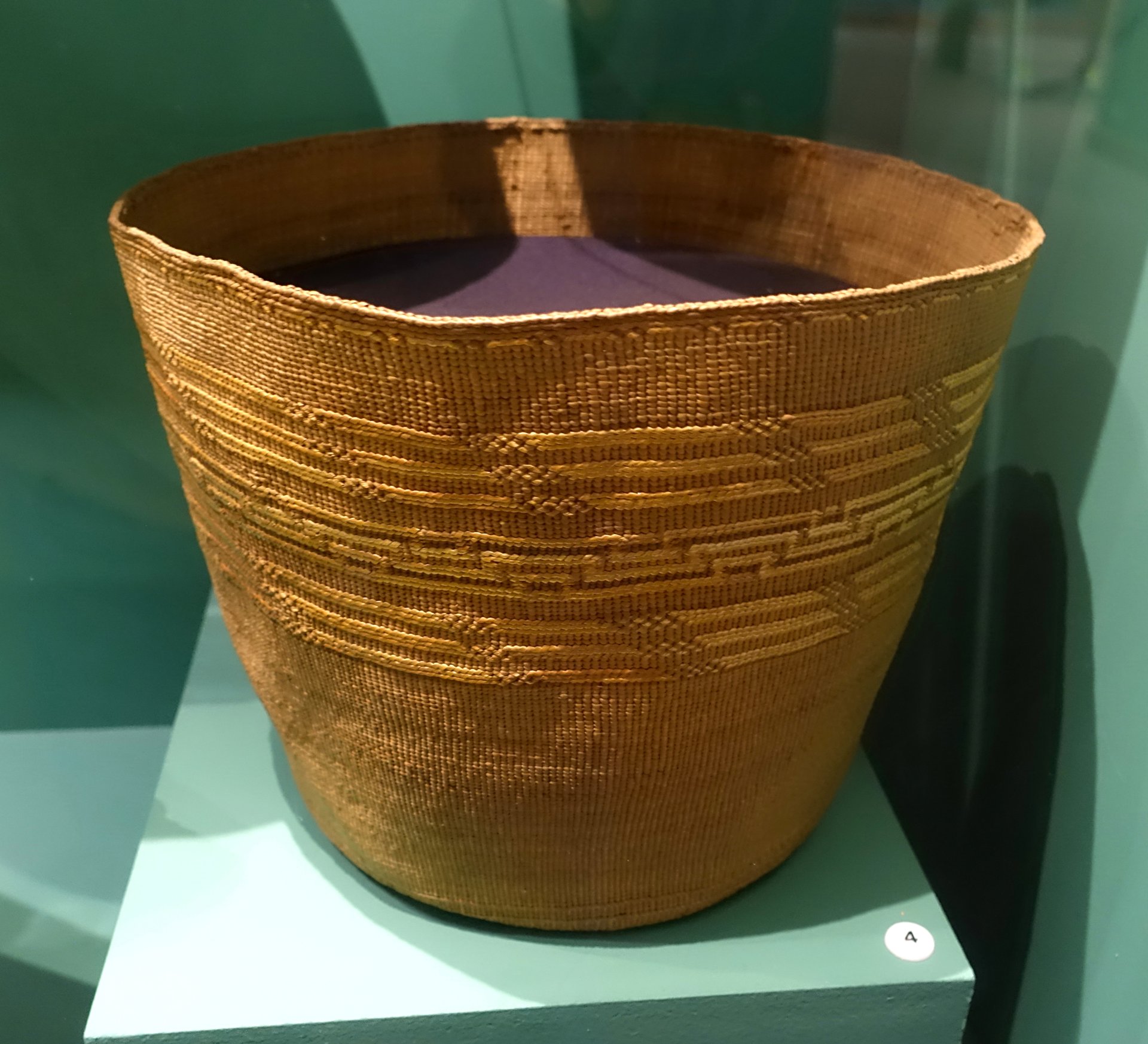
White spruce was arguably the single most economically important plant species in the boreal interior — not because any one use was irreplaceable, but because every part of the tree served multiple functions, and those functions ran across material culture, medicine, and food simultaneously. A Dena'ina camp was built of spruce logs, roofed and floored with spruce bark, lit by spruce-resin fire, provisioned through spruce-root fish traps, and medicated with spruce cambium tea.
Pitch and resin. Kari (1987) records that the Dena'ina distinguished four kinds of spruce pitch, each with its own name and applications. Jah — a hard, opaque pitch — was the preferred caulking material for birchbark canoes and baskets, and the most valued adhesive. A soft pitch scraped from the outer bark surface was chewed raw for heart trouble and tuberculosis, and applied as a poultice to cuts; this was what an injured person far from home would reach for first. A third type, found in pockets inside the wood, was spread on cuts, sores, and skin infections as a salve. A fourth use is documented for eye medicine — a small piece placed raw on an eye infection.
Garibaldi (1999), drawing on Kari (1995) and Hall (1979) for Interior Athabascan groups, records that boiled pitch was drunk to relieve urinary problems; pitch on canvas was wrapped around areas of blood poisoning to draw out infection; pitch was rubbed on warts; and for headache, pitch was boiled with water and the cloth wrung from the decoction was wrapped around the head. The Nulato-area Athabascans collected pitch in small baskets as it ran off trees and used it directly on cuts and sores. Yup'ik use documented in Jernigan (2012) — a distinct tradition but with overlapping boreal-species use — similarly records resin chewed as gum before store-bought gum arrived, with oil added to improve texture, and melted resin used as a general sealant, particularly for boat caulking.
Inner bark and cambium. The white inner bark (k'elutuna in Dena'ina) was both medicine and emergency food. As medicine, Kari (1987) records it boiled or soaked in hot water as a tea taken for ear troubles, kidney and heart problems, ulcers, stomach disorders, weak blood, colds, sore throats, mouth sores, and tuberculosis — a breadth of application that reflects a perceived general strengthening and cleansing property rather than any single targeted action. The juice was squeezed from raw bark directly into sore eyes; chewed raw, it served the same range of conditions. The inner bark was also used as a bandage, and as a medicine for sores, cuts, and burns — softened by chewing and affixed to the wound with pitch.
As food, inner bark is an emergency and famine resource that can be obtained any time of year. Kari quotes the 1789 explorer Portlock on Cook Inlet Natives using inner bark of conifers in spring to recover from scurvy — a consistent feature of the pan-northern ethnobotanical record, explained by the significant ascorbic acid content of fresh cambium. Schofield (2020) notes that inner bark can be dried and ground into flour. Garibaldi adds more detail from Interior Athabascan groups: raw cambium chewed for coughs and tuberculosis among Tetlin people, combined with Labrador tea, crowberry stems, and spruce tips for colds and mouth sores; cambium placed on cuts to facilitate healing. A separate record attributed to Martha Demientieff describes processing inner bark through a long preparation into a powder for diarrhea.
Outer bark. The outer bark had important non-medicinal roles. Kari records the Dena'ina boiling peeled outer bark — sometimes combined with birch bark — to produce a decoction used to dye moose skins and fishnets brown; the nets were dyed to camouflage them. Outer bark served as roofing, flooring, and siding for buildings and camp structures. Fish preparation typically happened on bark rather than on wood — bark's rough texture held fish in place. A piece of bark placed white-side up inside a basket fish trap served as a fish-attracting reflector.
Wood. The Dena'ina recognized distinct categories of spruce wood by growth rate and site condition, each suitable for different applications [16]. Rapidly grown, light-ringed wood (dehzila) from trees on dry warm ground was preferred for drums, dishes, arrows, and lumber, and bent for boat ribs. Medium-density wood (ch'ik'eda) from moist mossy forest was used for boat ribs, paddles, poles, and plank drums — some said plank drums made from this type sounded better. Dense, slow-grown wood (ggek) was used for armor slats and heavy construction.
Spruce logs built houses, caches, and steambath structures. Spruce poles served as fish racks, fish rafts, fish wheel frames, smokehouses, and lean-tos. Dry spruce poles were the preferred fire-drill kindling when no cedar was available. Poles served as probes for testing ice crossings and swampy ground, and for glacier travel with a bone tip added to one end. Dried standing dead spruce — locations of which were noted and memorized while traveling — was the preferred firewood and was harvested in greater quantity than any other wood. Firewood was the largest-volume use of spruce by far. Yup'ik material culture for spruce wood [18] overlaps substantially, adding adze handles, ice pick handles, wedges, gaffs, sleds, bows, drums, dance masks (including kegginaqut), snowshoes, boot insoles, shoehorns, knife handles, net shuttles, and toy dolls. Spruce wood was noted as good for knife handles because it does not dry and split.
Roots. Spruce root was, as Kari puts it directly, used "for anything that rope or string is used for today" — the Dena'ina cordage material. Roots were gathered along riverbanks where they emerged from eroded banks, or by hand-digging in damp mossy ground with a hooked stick. A sustainable harvest ethic is recorded: only a limited number of roots were taken from any tree, and after three years the same tree could be harvested again; low-bush cranberries were observed to grow better under trees where roots had been dug.
Preparation involved drying, then re-soaking before use; peeling with a knife or by pulling through a forked stick; and splitting by making a small cut at one end and pulling the halves apart with one end held in the teeth. The resulting split root string was used to attach rims to birchbark baskets, to weave dip nets, to bind building logs and raft logs, to sew drum hoops, to make arrow quivers, to serve as fishing line for halibut, and for fish snares. Woven spruce root baskets were in some cases watertight enough for cooking. Large curved roots formed the bow and ribs of skin boats; thick roots were carved into spoons and tool handles. The juice of the root served as eye medicine in the Inland Dena'ina area, cut or bitten at the end and dripped into the ailing eye.
Needles and new growth. Boiled rapidly, needle tea functioned as a purgative — said to taste foul enough to cause vomiting and "clean out the system" — and also as a cough medicine [16]. Trappers boiled traps with spruce needles to darken them and to remove human scent. A ritual use is recorded: a young girl could go to the mountains after her first year of puberty only if she wore spruce needles in her footgear. The young tips and the very top of young spruce are distinguished from mature needles and used differently. Kari records that the Dena'ina considered the new growth at the top of young trees one of the best medicines for bone aches and for "thinning one's blood" in spring — eaten boiled or raw. Garibaldi documents more detail from Interior Athabascan groups: green needles boiled for 5–10 minutes, drunk in small amounts for colds; one cup of the decoction daily to purify the blood or treat urinary problems; a diluted needle decoction for sitting baths; needles boiled for one hour and the water used as a skin wash for hives and rash; a pot of boiling spruce needles kept on the stove as a room antiseptic. Jernigan adds that needles should not be boiled for more than five minutes to avoid bitterness.
Sap. The running sap of spring was a distinct seasonal resource, collected by peeling bark and scraping sap directly from the wood in late May and June when it first ran freely. The Dena'ina described it as sweet early and stronger-tasting as the season progressed [16]. It was eaten fresh; medicinally, the Upper Inlet Dena'ina used spring sap for tuberculosis, the Inland people used it to heal burns and cuts, and the Outer Inlet Dena'ina applied a small amount to the eye to cure a growth.
Spiritual dimension. The Koyukon Athabascan belief recorded in Schofield (2020) — that white spruce carries a potent and kindly spirit — places it within the broader animistic framework of northern boreal peoples' relationships with the dominant trees of their landscape. This is consistent with but distinct from the ecological and material utility documented elsewhere; it is a relational rather than instrumental framing of the same species.
A scope note: the Dena'ina records describe the Cook Inlet and adjacent interior drainage areas, not the Denali Park Road corridor directly, though species and habitat overlap is extensive. Garibaldi covers Interior Athabascan traditions broadly but as a secondary compilation; claims specific to named groups should trace to primary sources. Jernigan documents Yup'ik rather than Athabascan tradition and is geographically removed from the Denali interior. All records are historical past tense unless otherwise noted; contemporary continuation of individual practices is [not addressed in sources].
9. Treeline and Climate Change in Denali
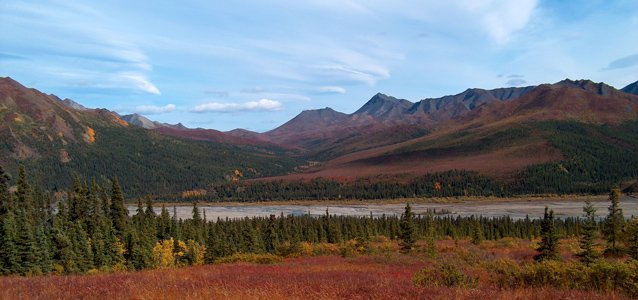
White spruce is the defining species at the boreal-tundra ecotone throughout Denali. Viereck and Little (1972) record treeline in interior Alaska at roughly 1,000–3,500 ft (305–1,067 m), depending on aspect, latitude, and topographic position. The range is that wide because aspect effects are as strong as latitudinal position. Van Ballenberghe (1992) cites central Alaska treeline (64 °N) at approximately 750 m, consistent with the park's foothills and lower Alaska Range flanks.
On the ground, the ecotone is not a sharp line. Closed white spruce forest grades through increasingly open woodland and krummholz-form individuals into shrub tundra dominated by dwarf birch and willow. The transition zone is wide, spatially diffuse, and structurally complex — krummholz mats, isolated multi-stemmed individuals, and layered clones can persist for centuries at or above the forest limit independent of seedling recruitment. This distinction matters for interpreting climate signals. White spruce at treeline tends to reproduce vegetatively by layering — lower branches touching soil take root and sprout new stems — so clonal stands can spread laterally without seed production. The result is the ragged, island-like treeline form characteristic of interior Alaska.
What repeat photography shows. The Denali Repeat Photography project (Roland and Stehn 2013, in NPS Alaska Park Science 2013) documents four decades of landscape-scale change from matched photo pairs: spruce expanding into formerly treeless areas, invasion of open wetlands by woody vegetation, colonization of open floodplains and terraces, and shrinking ponds. The authors characterize these as directional changes — qualitative shifts in the landscape mosaic, not cyclical fluctuations.
A decade-long structured vegetation monitoring program (2001–2010) covering 3.2 million acres of northern Denali (Roland et al. 2013, summarized in Carney and Wesser 2013) finds that white spruce may respond favorably to warming by increasing in abundance and distribution, including expanding into newly thawed terrain. Critically, the study finds no current evidence for a large-scale shift from spruce to broadleaf-dominated forest in the lowlands; coniferous forests still dominate.
Growth versus recruitment. Two responses must be distinguished and are not coupled on the same timescale. Growth response (existing trees growing faster or slower) is fast; recruitment response (new seedlings establishing above or beyond the existing limit) is slow. In southwest Alaska (Lake Clark/Katmai), NPS monitoring using tree-ring data shows increased radial growth over the last 10–30 years across all sites, with northernmost sites showing the earliest response — a decade or more ahead of southern sites (Carney and Wesser 2013). This is a growth response, not a range advance.
Range advance requires successful recruitment beyond the existing limit: seed production, dispersal, germination, and multi-year seedling survival above existing treeline. Each step is a filter. Even if warming allows growth increases for existing trees, it does not automatically unlock recruitment at higher elevations — growing seasons there are still too short for reliable cone-crop production, and seedling microsites are harsh (frost heave, desiccation, ice abrasion). Chapin et al. (2006) note that increased summer temperatures may simultaneously increase moisture stress, which can constrain growth and reproduction in ways that partially offset warming benefits.
Lag effects. Pielou (1994) articulates the structural lag that makes treeline advance slower than the climate signal driving it. Many segments of current treeline consist of trees surviving from warmer Holocene conditions — they are at or beyond the position sustainable by current climate for seed reproduction but persist via clonal layering. Warming must be sufficient to enable reliable seed production by the currently uppermost trees before seedlings can establish beyond them; only then does actual range advance begin. A treeline that looks stable may be a persistence artifact, not equilibrium. Conversely, an advancing treeline in repeat photography may reflect vegetative expansion (lateral spread of clones) rather than elevational colonization via seedlings — these are visually similar but ecologically different. The Roland et al. finding of expansion into newly thawed terrain is consistent with vegetative spread facilitated by permafrost thaw rather than necessarily seedling establishment at new elevations. Chapin et al. document that permafrost proximity is a key limiter on white spruce establishment.
Aspect asymmetry. Viereck and Little state it directly: treeline is "lowest in the north and west and on north-facing slopes and highest in the southeast interior and on south-facing slopes." The elevation differential can span several hundred meters. The mechanism is the same one that structures the boreal mosaic at lower elevations: aspect controls surface energy balance through insolation angle, snow duration, and soil temperature. South-facing slopes in Denali receive more direct solar radiation, warm and dry faster in spring, have shallower or absent permafrost, and have deeper active layers. White spruce grows best on well-drained south-facing slopes [1] precisely because these conditions avoid the permafrost-proximity constraint and extend the thermal growing season.
For climate-change treeline dynamics this asymmetry has practical consequences (footer disclosure). South-facing slopes are likely to show earlier and stronger signals — both growth response and potentially recruitment advance — because they are already thermally favored and incremental warming crosses reproduction and seedling-establishment thresholds first. North-facing slopes have more thermal inertia; permafrost is shallower, active layer thinner, growing season cooler. Climate-driven treeline advance on north-facing aspects will lag south-facing by decades and may depend on permafrost thaw as much as air temperature warming.
White spruce treeline in Denali is therefore not a static boundary but a zone of vegetative persistence, lateral spread, and episodic recruitment — each process responding to different aspects of climate change on different timescales. Growth increases in existing trees are the fastest signal, already documented. Vegetative expansion via layering and colonization of thawed terrain is ongoing and visible in repeat photography. Seedling recruitment above the existing limit — the signal that would represent genuine elevational advance — is the slowest response and most subject to lag. South-facing slopes are the leading edge of all three processes; north-facing slopes are the lagging edge.
Article-Level Inferences
This article uses the long-form accommodation in synthesis_rules_v1_3.md §3.8: Tier 4 inferences (causal, mechanistic, or temporal links the sources do not explicitly state) appear in the prose without inline [Inference] tags. They are listed here in plain language, and manifest_v1.yaml carries per-section source attribution including tier markers. Tier 5 (general knowledge, not in sources) tags remain inline per §3.8(4), as do [Conflict] flags.
-
Larsen's water-sensitivity result frames white spruce's drainage niche (§1). Larsen's greenhouse finding that white spruce is more affected by upper-soil water than other boreal conifers tested is presented as a partial explanation for why white spruce performs well on drained but capillary-water-accessible sites like river terraces. Larsen reports the experimental result and notes the species' occurrence with alluvium; the explanatory link between the two is the article's inference.
-
Landscape-level partition between fast-cycling and slow-cycling species (§4–5). The article frames south-facing/riparian (slow white-spruce cycle, ~100 yr succession, ~113 yr fire interval) and north-facing/poorly-drained (fast black-spruce cycle, 15–30 yr recovery, 36 yr fire interval) as a single landscape-level partition driven by fundamentally different disturbance and thermal regimes. Chapin et al. document the species-level fire dynamics separately; the unified two-regime landscape framing is the article's inference.
-
Climate-mediated seed–fire synchrony as partial offset (§5). The article notes that the same hot-dry weather promoting fire also promotes following-year cone production, and that this coupling may partly buffer white spruce recruitment under a more active fire regime. Chapin et al. document the seed–weather correlation; the buffer framing is the article's inference, hedged inline as [General knowledge, moderate confidence].
-
Permafrost feedback from beetle-driven stand conversion (§6). The article suggests that removal of insulating white spruce canopy on marginal-permafrost sites could shift soil thermal regimes, and that black-spruce replacement (as observed in the Copper River Basin) would actively promote permafrost development, making conversion self-reinforcing. Neither source explicitly draws this beetle-to-permafrost-aggradation link; the article assembles it from documented separate connections (canopy loss → soil warming; black-spruce moss → permafrost development; Drazkowski's observed conversion).
-
Masting–fire–hare temporal coupling (§7). The article notes that the same hot-dry weather triggering cone buds also promotes fire, which regenerates the willow/aspen/birch browse driving the hare cycle a decade or two later. Both connections (weather → cones; fire → browse cycle) are individually documented in Chapin et al. and Larsen; the multi-step temporal chain is the article's inference.
-
Aspect-based climate-signal leading/lagging edge (§9). The article projects that south-facing slopes will show earlier and stronger climate-change signals at treeline (growth, vegetative expansion, eventual recruitment) than north-facing slopes, which will lag by decades and depend on permafrost thaw timing as much as air temperature warming. Viereck and Little document the aspect asymmetry of current treeline; Chapin et al. document permafrost dependencies. The projection itself is the article's inference, drawing on both.
Coverage Gaps and Currency Notes
- White spruce ecophysiology at species-monograph depth is [not in sources] — see §3 closing note. Mechanistic detail on needle anatomy, stomatal control, and mycorrhizal architecture under permafrost conditions is absent. The standard reference (Nienstaedt and Zasada USFS species account) would fill this gap.
- Interior Alaska post-glacial moraine succession is [not in sources] — see §4. The standard reference (Glacier Bay) is coastal and involves Sitka, not white, spruce.
- Fire-regime data [10] covers only through 2009. Major fire years since (2015, 2019, 2022) are [not in sources]. The 50% increase in burned area and the drop in fire-return interval from 196 to 144 years are pre-2010 numbers; current values likely diverge.
- Contemporary practice of Dena'ina and Athabascan spruce uses documented in §8 is [not addressed in sources]. Kari, Garibaldi, and Jernigan record historical and traditional use; continuation of individual practices is not documented in the routed catalog.
- ADFG (2025) is current-as-of access date. Agency wildlife pages update routinely; any cited claim should be re-verified on each use.
- Werner et al. 2006 on overwintering beetle cold-kill (§6) is cited via Drazkowski; the primary is [not in the routed catalog directly].
Sources
Alaska Department of Fish and Game 2025; Armstrong 2015; Carney and Wesser 2013; Chapin et al. 2006; Drazkowski et al. 2011; Garibaldi 1999; Holsten 2009; Jernigan 2012; Kari 1987; Kasischke et al. 2010; Larsen 1980; Marchand 2014; Murie 1962; Pielou 1991; Pielou 1994; Roland and Stehn 2013; Roland et al. 2013; Schofield 2020; Van Ballenberghe 1992; Viereck and Little 1972; Viereck and Schandelmeier 1980; Viereck et al. 1992.
(Per synthesis_rules_v1_3.md §2, the citation manifest at manifest_v1.yaml is the authoritative per-paragraph attribution record; this Sources line is a reader convenience.)
References
- ^ Viereck & Little Jr. 1972. Alaska Trees and Shrubs.
- ^ Pielou 1994. A Naturalist's Guide to the Arctic.
- ^ Van Ballenberghe 1992. Behavioral Adaptations of Moose to Treeline Habitats in Subarctic Alaska.
- ^ Stuart Chapin III et al. 2006. Alaska's Changing Boreal Forest.
- ^ Viereck & Schandelmeier 1980. Effects of Fire in Alaska and Adjacent Canada: A Literature Review.
- ^ Viereck et al. 1992. The Alaska Vegetation Classification.
- ^ Larsen 1980. The Boreal Ecosystem.
- ^ Marchand 2014. Life in the Cold: An Introduction to Winter Ecology.
- ^ Pielou 1991. After the Ice Age: The Return of Life to Glaciated North America.
- ^ Kasischke et al. 2010. Alaska's Changing Fire Regime — Implications for the Vulnerability of Its Boreal Forests.
- ^ Holsten et al. 2009. Insects and Diseases of Alaskan Forests.
- ^ Drazkowski et al. 2011. Wrangell-St. Elias National Park and Preserve Natural Resource Condition Assessment.
- ^ Armstrong 2015. Guide to the Birds of Alaska.
- ^ Department of Fish and Game 2025. ADFG Wildlife Notebook Series — Denali-Relevant Species Selection (merged).
- ^ Murie 1962. The Mammals of Mount McKinley.
- ^ Russell Kari 1987. Tanaina Plantlore, Dena'ina K'et'una.
- ^ Garibaldi 1999. Medicinal Flora of Alaska Natives.
- ^ Jernigan 2012. A Guide to the Ethnobotany of the Yukon-Kuskokwim Region.
- ^ Schofield Eaton 2020. Alaska's Wild Plants: A Guide to Alaska's Edible Harvest.
- ^ Carl et al. 2013. Alaska Park Science, Volume 12, Issue 2: Climate Change in Alaska's National Parks.